Shopping for a single-family home in Wilmette can feel like comparing completely different worlds. One home may be an early 1900s Prairie design with original millwork, while another may be a 1950s modern house with flat planes and large windows, and another may be newer construction on an older lot. If you understand how Wilmette homes evolved over time, you can tour with more confidence, ask better questions, and spot the kind of value that fits your lifestyle. Let’s dive in.
Why home era matters in Wilmette
Wilmette’s character comes from a long, layered development history. The village highlights its single-family residences, brick-paved streets, tree-lined streets, period street lights, and proximity to Lake Michigan as part of its distinctive identity, shaped by growth patterns from incorporation in 1872 through postwar expansion and more recent replacement construction (Historic Preservation Resources).
That means “single-family home in Wilmette” is not one uniform category. You may be looking at a preserved early-20th-century home, a 1920s revival house in a planned subdivision, a mid-century modern residence, or a newer infill home built on an older homesite. Wilmette also has 38 local landmarks and three National Register historic districts, so designation status can matter just as much as age or size (local landmarks and historic districts).
Prairie and Arts & Crafts homes
What defines this era
If you are drawn to architecture with strong lines and custom detail, Wilmette’s Prairie and Arts & Crafts homes stand out. Local examples include the 1909 Frank J. Baker House and the Alfred Bersbach House, built around 1915, both noted for their strong horizontal emphasis and close relationship to the site (Frank J. Baker House).
These homes often appeal to buyers who want an early-modern Chicago-area feel. You may notice horizontal lines, carefully integrated porches, art glass, and a sense that the house was designed as a complete composition rather than a collection of separate features.
What buyers often appreciate
The biggest draw is usually character. These homes can offer custom craftsmanship, architectural significance, and details that are hard to replicate today.
They also tend to feel highly individual. If you want a home with a clear design point of view rather than a more standardized look, this era may be especially appealing.
What to look at closely
Because these homes are older and often highly detailed, it helps to look beyond appearance. Original windows, trim, masonry, and built-ins can be beautiful, but they may also require thoughtful upkeep.
A useful way to tour these homes is to ask what original features remain and what has already been updated. In Wilmette, many historic homes blend preserved architectural elements with later renovations rather than staying frozen in time (Wilmette Housewalk materials).
Revival homes from the 1920s and 1930s
Why this era is so visible
A major chapter in Wilmette’s housing story came with planned development in the 1920s. According to the Wilmette History Museum, Indian Hill Estates began in 1926 after Wilmette annexed 1,500 acres west of Illinois Road, and developers used several architects to create speculative homes in a wide range of traditional styles (Indian Hill Estates brochure).
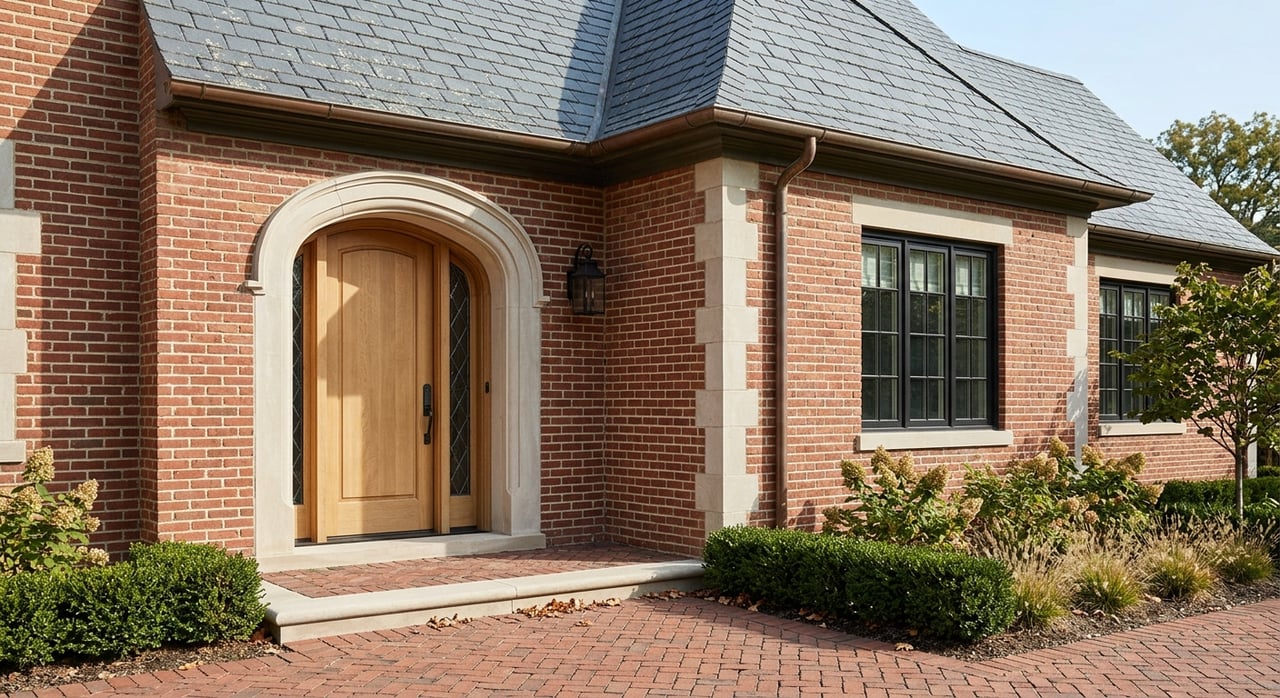
That variety still shapes the look of many Wilmette streets. You can find Tudor Revival, Colonial Revival, Spanish Revival, French Eclectic, Norman Revival, Classical Revival, and related styles in this period.
Common style features
These homes often rely on traditional materials and dramatic curb appeal. Depending on the house, you may see:
- Brick or stone exteriors
- Steeply pitched roofs
- Half-timbering
- Arched entries
- Decorative chimneys
- Symmetrical or historically inspired facades
For many buyers, this era delivers a strong first impression. The architecture tends to feel established, polished, and visually distinctive.
The practical tradeoff
The same period charm that makes these homes appealing can also shape renovation needs. Based on the forms and materials described in local history resources, updates to kitchens, baths, insulation, and windows may be more involved than in newer construction (Indian Hill Estates brochure).
That does not mean these homes are less functional. It simply means your decision should include both the architecture you love and the level of updating you are comfortable taking on.
Modern and International Style homes
Wilmette’s modernist side
Many buyers are surprised to learn that Wilmette also has an important modernist layer. The registration form for the Eli and Jeanne Lipman House notes that Wilmette includes a number of modern homes influenced by both the International Style and Frank Lloyd Wright’s organic architecture, including George Fred Keck’s 1937 Bruning House and other notable mid-century examples (Lipman House registration form).
This era offers a very different design language from revival homes. Instead of ornament and historic references, you are more likely to see simplicity, function, and cleaner geometry.
What living in these homes can feel like
Modern and International Style homes often signal a different day-to-day experience. Local descriptions point to flat roofs, minimal ornament, and simple, functional design, which often translates to lighter interiors and more streamlined living spaces (Lipman House registration form).
For some buyers, that simplicity is the main attraction. If you prefer less visual fuss and a more open, design-forward feel, this era can be a strong match.
What to evaluate during a tour
With modern homes, the conversation often shifts away from decorative detail and toward systems and performance. Larger windows, flatter rooflines, and simpler exterior forms can affect maintenance priorities differently than masonry-heavy revival homes.
As you tour, it helps to focus on how the home has been maintained and improved over time. You are not just buying a style. You are buying the current condition of that style.
Postwar and newer homes
Growth after World War II
Wilmette saw another major building wave after the opening of the Edens Expressway in 1951. Village history notes that farmland gave way to new streets, homes, and parks, and the population grew from 18,162 in 1950 to 32,134 in 1970 (history of Wilmette).
Homes from this broader postwar period may offer a different balance of space, function, and lot use. In many cases, they reflect changing expectations around daily life, car ownership, and more flexible family layouts.
Newer construction in Wilmette today
Wilmette’s newer single-family housing often comes from replacement construction, not brand-new subdivisions. Local history sources note that from the mid-1990s to the present, older houses have increasingly been torn down or enlarged, creating newer and often larger homes on older lots (history of Wilmette).
That matters if you want newer interiors without leaving an established neighborhood setting. In Wilmette, newer homes are often woven into older streetscapes rather than grouped in one newly built area.
How to compare homes by era
Think beyond style alone
Architecture shapes first impressions, but your decision should also come down to how the home works for your life. In Wilmette, many preserved homes already combine original details with thoughtful updates, so the question is often less about old versus new and more about which updates have already been completed (Wilmette Housewalk materials).
A helpful way to compare homes is to think about three things at once:
- How much original character you want
- How much updating has already been done
- How well the current layout fits your daily routine
A simple buyer framework
Here is a practical way to think through Wilmette homes by era:
| Era | Often Appeals To Buyers Who Want | Key Questions |
|---|---|---|
| Prairie / Arts & Crafts | Architectural significance and custom detail | Which original features remain, and how have they been maintained? |
| 1920s-30s Revival | Traditional curb appeal and established character | How much updating may be needed in kitchens, baths, windows, or insulation? |
| Modern / International | Simplicity, light, and cleaner lines | What improvements have been made to roof systems, glazing, and core systems? |
| Postwar / Newer | Functionality and more recent construction | Is this original postwar housing or later replacement construction on an older lot? |
Research tools for Wilmette buyers
Check landmark or district status
Before you get too far into a property, confirm whether it is a local landmark or located within a historic district. The village notes that local landmarks and National Register properties may be eligible for the Property Tax Assessment Freeze Program, while National Register listing itself is honorific and does not by itself prevent demolition or inappropriate alterations (local landmarks and historic districts).
This step can give you better context for future changes, tax questions, and the home’s place in Wilmette’s architectural story.
Use local history resources
Wilmette offers unusually strong house-history resources for buyers who want to dig deeper. The Wilmette History Museum Research Center holds maps, photos, real-estate records, and newspaper clippings that can help confirm construction dates and later changes (Wilmette History Museum Research Center).
The Wilmette Public Library also maintains house-history files and architectural inventories referenced by the museum resource page. If you are considering a distinctive or older property, these tools can help you understand what you are seeing before you make a decision.
Questions to ask before you buy
No matter which era you prefer, a few questions can help you compare homes more clearly:
- What original features still survive?
- What has already been replaced or renovated?
- Is the home locally landmarked or in a historic district?
- Does the current layout work for how you live now?
- Would you likely want to renovate soon after closing?
These questions line up with how Wilmette’s historic and architecturally significant homes are often presented in local preservation and housewalk materials (Wilmette Housewalk materials). They can help you move past surface-level charm and make a more informed decision.
If you are comparing Wilmette homes and want a clear, design-aware perspective on how architecture, updates, and resale potential come together, Nicole Fabiano can help you evaluate your options with confidence.
FAQs
What makes Wilmette single-family homes different by era?
- Wilmette developed in layers, so homes can range from early 1900s Prairie designs to 1920s revival houses, mid-century modern homes, and newer replacement construction on older lots.
What should buyers know about historic designation in Wilmette?
- Buyers should check whether a home is a local landmark or in a historic district, because designation can affect context, research, and possible eligibility for the Property Tax Assessment Freeze Program.
What defines Prairie and Arts & Crafts homes in Wilmette?
- These homes are known for strong horizontal lines, custom detailing, and a close relationship to the site, with notable local examples tied to important regional architecture.
What are common features of 1920s and 1930s revival homes in Wilmette?
- Revival homes often feature brick or stone, steep roofs, half-timbering, arched entries, decorative chimneys, and other traditional design elements.
What should buyers look for in Wilmette modern or mid-century homes?
- Buyers should pay close attention to features like larger windows, flatter roofs, and past improvements, since these homes often prioritize simplicity, function, and minimal ornament.
Where can buyers research the history of a Wilmette home?
- Buyers can start with the Wilmette History Museum Research Center and village preservation resources to review maps, photos, records, landmark status, and historic district information.